
What a bluff tries to achieve
The following details clarify how this works. A bluff wagers with a hand that expects to win mainly by making better hands fold. Its value depends on how often the opponents fold and how much is risked. A bet that is always called by a stronger hand cannot be justified simply by describing it as aggressive. You can return to this explanation whenever you need a reminder.
A consistent betting story
A useful starting point is the following overview. Earlier actions shape which strong hands your later bet can plausibly represent. A river wager is easier to assess when you remember the pre-flop, flop and turn decisions. Consistency does not force an opponent to fold, but an implausible sequence can invite more calls. If a question remains, the FAQ form provides a way to contact the operator.
Board texture — details
The explanation below covers the main points. Coordinated boards can support draws and strong made hands, while dry boards offer fewer obvious combinations. Ask which cards help the hands each player could hold. A board that looks frightening to you may fit an opponent's range very well. You can return to this explanation whenever you need a reminder.
Semi-bluffs
The key details are straightforward. A semi-bluff uses a hand that can improve if called, such as a meaningful straight or flush draw. Both fold chances and future hand strength contribute to the decision. A draw with dirty outs or an expensive price can still be a poor betting candidate. These details provide context for the choices described here.
Blockers — details
The following details clarify how this works. A card in your hand removes some combinations from the opponent's possible holdings. Holding an ace of a flush suit, for example, can exclude that exact ace-high flush from their range. A blocker changes possibilities but does not reveal the opponent's cards or guarantee a fold. The same principles apply each time you use this part of the site.
Choose a size with a purpose — details
The key details are straightforward. A larger bluff risks more chips and generally needs more folds to work as a pure bluff. A smaller size costs less but offers the opponent a better calling price. Compare the bet with the pot and with the kinds of hands you expect to continue. Read this alongside the related information on this site.
Multiple opponents
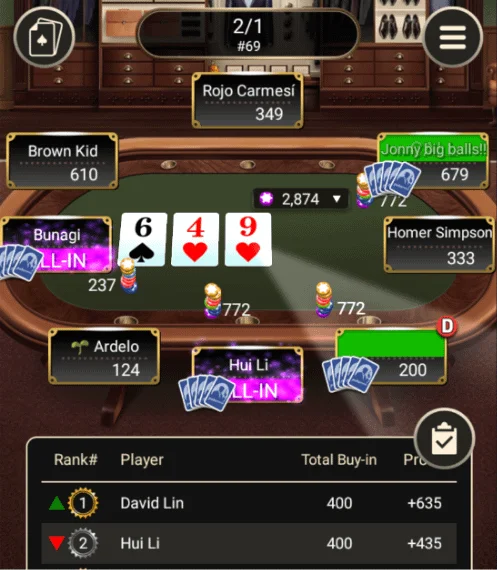
The explanation below covers the main points. A bluff into several opponents must get enough of them to fold for the plan to succeed. That can be harder than making one player fold, especially on a connected board. Consider whether your hand also has useful showdown value before turning it into a bluff. Use this explanation as a reference during your next visit.
Know when to stop
For this topic, keep the following in mind. Being called on an earlier street is new information. The next card can improve the opponent's range or reduce your own credible value hands. Checking or giving up after a failed attempt can be a deliberate decision instead of a reason to keep increasing the risk. A careful reading can help you distinguish the different situations.
Practice without certainty
The key details are straightforward. These computer players make randomized decisions using their own cards and public information. A bluff can fail against a weak hand or work against a stronger one. Neither outcome alone proves that the chosen size and situation were appropriate. Use this explanation as a reference during your next visit.
Review the alternatives — details
A useful starting point is the following overview. After the hand, compare the bluff with checking, calling or folding where those options were available. Note the chips risked, the target hands and the expected response. Separating your reasoning from the final result makes the review more useful for a later similar spot. Use this explanation as a reference during your next visit.